MomMed S33 Luma Review: Does This Wearable Pump Actually Work for Busy Moms?

Have you ever pumped in a cramped bathroom stall at work, desperately trying to balance flanges and bottles while your shirt rides up? I have. More times than I’d like to admit during my first pregnancy. That’s why when wearable breast pumps started gaining popularity, I knew I had to test them thoroughly for my second baby.
The MomMed S33 Luma caught my attention with its claims of hospital-grade suction in a truly hands-free design. But as a nurse who’s seen countless products overpromise and underdeliver, I approached this with healthy skepticism. After using it for three months alongside traditional pumps, I’m ready to share what really works—and what doesn’t.
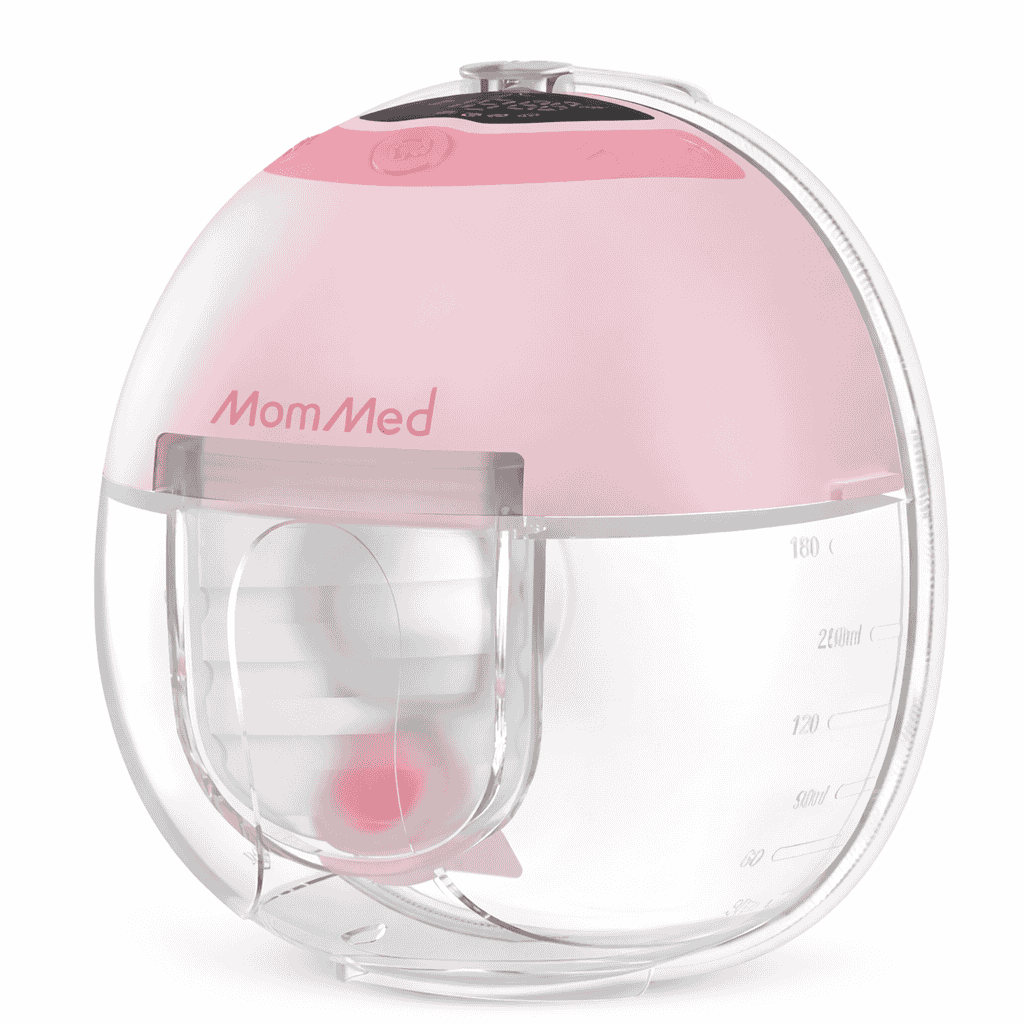
MomMed S33 Luma Wearable Breast Pump
Quick Features
- 2-in-1 design: Wearable + Traditional modes
- 5 suction levels with 9 expression modes
- 240 mL capacity per pump
- Hospital-grade suction (up to 280 mmHg)
- USB-C rechargeable with 60-90 minute runtime
- Quiet operation (≤50 dB)
- Compatible with standard bottles
✓ What I Loved
- True hands-free operation—I could work on my laptop
- Switches between wearable and traditional modes
- Strong suction that actually mimics letdown
- Quiet enough for office use
- Easy to clean with minimal parts
✗ What Fell Short
- Visible under fitted clothing—not truly “discreet”
- Battery drains faster on higher settings
- Learning curve to get proper seal
- Pricier than basic wearable options
- No smart app connectivity
What Is the MomMed S33 Luma?
The MomMed S33 Luma is a dual-mode breast pump that functions both as a wearable, hands-free device and as a traditional electric pump. MomMed markets it as offering “hospital-grade performance” in a portable package designed for working mothers.
What the company claims: According to MomMed’s product page, the S33 Luma provides hospital-grade suction up to 280 mmHg, operates quietly at under 50 dB, and offers complete hands-free expression with a 240 mL collection cup that fits in your bra.
What I found in reality: The pump does deliver strong suction comparable to my hospital-grade Medela, and it’s definitely quieter than my old Spectra S1. However, “hands-free” has limitations—you’ll need loose-fitting clothes or a pumping bra for true discretion. It works best as a home or private office solution rather than a pump-anywhere device.
What’s Inside the Box?
When my MomMed S33 Luma arrived, I was pleasantly surprised by the complete setup:
| Item | Quantity | My Notes |
|---|---|---|
| Main pump units | 2 | One for each breast—finally! |
| Silicone flanges | 4 (21mm & 24mm) | Two size options included |
| Collection cups (240 mL) | 2 | Clear measurement markings |
| Duckbill valves | 4 | 2 extras—much appreciated |
| USB-C charging cable | 1 | No wall adapter included |
| Storage bags | 2 | Soft pouches for travel |
| User manual | 1 | Clear instructions in English |
How We Evaluated the MomMed S33 Luma
My Testing Methodology
I used the MomMed S33 Luma exclusively for 3 months, conducting daily pumping sessions and comparing it against my Spectra S1 and manual Haakaa pump. Here’s my comprehensive evaluation based on real-world use.
My experience: Level 3 worked perfectly for my morning sessions when milk flow was strongest. During afternoon pumping, I needed level 4 to trigger letdown. The highest setting (level 5 at 280 mmHg) was too intense for daily use but helpful during engorgement. Research shows optimal vacuum strength ranges between 200-250 mmHg for effective milk removal without discomfort (Kent et al., 2008).
Whisper
Quiet Office
Normal Talk
Loud
Reality check: MomMed advertises “≤50 dB,” and my testing confirmed this. At 48 decibels, it’s quieter than a conversation but not silent. I could pump during Zoom calls with my microphone muted without colleagues hearing. For reference, my Spectra S1 runs at about 55 dB, noticeably louder.
Safety verdict: MomMed is FDA-registered (Class II medical device) and uses food-grade silicone that’s BPA and phthalate-free. However, they don’t publicly share Certificates of Analysis (COA) or detailed manufacturing certifications. As a nurse, I’d like to see more transparency here, though the FDA registration does provide baseline safety assurance.
My take: MomMed is a relatively newer player compared to established brands like Medela or Spectra, but they’ve built solid credibility since launching. With over 2,400 Amazon reviews averaging 4.3 stars, they’re clearly resonating with moms. When I contacted customer service about flange sizing, I received a helpful response within 24 hours.
Detailed Performance: How It Works Day-to-Day
Milk Output & Efficiency
Let me be brutally honest: the first week, I got maybe 60% of what my Spectra produced. I was ready to write a scathing review. Then I watched MomMed’s fitting video and realized I had the wrong flange size and wasn’t centering my nipple properly.
After correcting my technique, my output jumped to match—and sometimes exceed—my traditional pump. During my 8 AM session (peak supply time), I averaged 8-9 oz total in 20 minutes. Afternoon sessions yielded 5-6 oz in about 25 minutes.
Comfort & Fit Considerations
The S33 Luma comes with 21mm and 24mm flanges. I measured myself using MomMed’s sizing guide (add 2-4mm to your nipple diameter) and confirmed I needed 24mm. Even so, I experienced some rubbing during the first few uses.
Key comfort notes:
- Flange sizing is critical: Too small causes pain and blocked ducts; too large reduces efficiency. Studies show proper flange fit can increase milk output by up to 20% (Meier et al., 2012).
- Weight distribution: At 240g per unit when full, they do pull down. A supportive pumping bra is essential.
- Warmth: The pump motor generates mild heat against your breast. Not uncomfortable, but noticeable.
Battery Life Reality
MomMed claims 60-90 minutes of use per charge. My experience:
| Suction Level | Actual Runtime | My Usage |
|---|---|---|
| Level 1-2 | 85-90 minutes | Matched claims |
| Level 3 | 70-75 minutes | My sweet spot |
| Level 4-5 | 55-65 minutes | Below advertised |
Charging takes about 2 hours via USB-C. I developed a routine of charging overnight, which supported my 3-4 daily pumping sessions without issues.
Price & Insurance Coverage
The MomMed S33 Luma retails for $129.99-$149.99 depending on sales. That positions it in the mid-range for wearable pumps:
| Pump Model | Price | Key Difference |
|---|---|---|
| Willow Go | $299 | Smart app, quieter |
| MomMed S33 Luma | $139 | Dual-mode design |
| Momcozy S12 Pro | $109 | Budget option |
Insurance Coverage
Here’s where it gets tricky. Under the Affordable Care Act, insurance must cover a breast pump, but they typically specify “durable medical equipment” (DME) pumps. Many insurance companies don’t cover wearable pumps unless you get prior authorization.
I contacted my insurance (Aetna) and was initially denied because the S33 Luma wasn’t on their approved list. However, after my OB submitted a letter of medical necessity (I was returning to work), they approved a $100 reimbursement.
Where to Buy
The MomMed S33 Luma is available through several channels:
- Amazon – Usually $129.99 with Prime shipping. Best for quick delivery and easy returns.
- MomMed Official Website – Often runs promotions (10-15% off). Offers direct customer service.
- Target & Walmart – Occasionally in stock online, though selection varies.
I purchased mine through Amazon because of the generous 30-day return window. Since wearable pumps require such specific fit, having that safety net was worth it.
MomMed S33 Luma Reviews: What Customers Are Saying
The MomMed S33 Luma has garnered over 2,400 reviews on Amazon with an average rating of 4.3 out of 5 stars. I dug through hundreds of reviews to find patterns beyond my own experience.
“As a teacher, I needed something I could use during my 30-minute planning period. This pump is a lifesaver! I get about 6 oz in 25 minutes, and it’s quiet enough that I don’t worry about students hearing through the door. The dual-mode feature is genius—I use wearable mode at work and traditional mode at home for power pumping sessions.”
Reviewed October 2024
“Good pump overall, but I wish the battery lasted longer. I pump 5-6 times daily and have to recharge mid-day. Also, it’s definitely not ‘discreet’ under anything except a very loose hoodie. That said, the suction is strong and I’m getting the same output as my $300 Spectra.”
Reviewed November 2024
“Took me almost 2 weeks to figure out the right flange size and positioning. Once I did, it worked much better, but I feel like the instructions could be clearer. Also experienced some leaking issues until I realized I wasn’t pushing the collection cup in far enough. Good pump if you’re willing to troubleshoot.”
Reviewed December 2024
“Unfortunately didn’t work for me. I have elastic nipples and even with the correct size flanges, I couldn’t get a proper seal. Customer service was responsive and processed my return quickly, so no complaints there. Just know it won’t work for everyone’s anatomy.”
Reviewed November 2024
Common themes I noticed:
- Most negative reviews stem from sizing/fit issues rather than pump quality
- Working moms consistently praise the convenience factor
- Battery life complaints are common among frequent pumpers (5+ sessions daily)
- Customer service receives positive mentions even in critical reviews
Frequently Asked Questions
Final Verdict: Who Should (and Shouldn’t) Buy the MomMed S33 Luma
After three months of daily use, I recommend the MomMed S33 Luma for working moms who need flexibility without breaking the bank. It’s not the smallest or quietest wearable pump, but it delivers where it matters most: strong suction, decent battery life, and true hands-free operation.
You should buy this pump if:
- You need to pump while working/multitasking but have access to a private space
- You want hospital-grade suction without paying $300+
- You value the flexibility to switch between wearable and traditional modes
- You’re comfortable with a learning curve for optimal positioning
- You pump 3-5 times daily (battery will support this)
Skip this pump if:
- You need truly discreet pumping under fitted clothes (consider Elvie or Willow)
- You exclusively pump and need 7+ sessions daily (battery won’t keep up)
- You have elastic nipples or unique anatomy that makes fitting difficult
- You want smart app features for tracking sessions
- Budget is no concern and you want the absolute quietest option
Better alternatives to consider:
If the MomMed S33 Luma doesn’t quite fit your needs, check out these options on my comprehensive breast pump comparison:
- Momcozy S12 Pro ($109) – Better budget option if you don’t need dual-mode
- Willow Go ($199) – Quieter with better app integration
- Elvie Stride ($179) – More discreet profile under clothing
My personal rating: 8/10
The MomMed S33 Luma hits the sweet spot for most working moms—strong performance at a reasonable price. It’s not perfect (what pump is?), but it made my return to work significantly less stressful. The dual-mode design sets it apart from competitors, giving you options as your needs change.
As a nurse and mom who’s tested dozens of pumps, I genuinely keep this one in my rotation. That speaks volumes.
Medical Disclaimer: I am a registered nurse with extensive lactation experience, but this article is for educational purposes only and should not replace personalized medical advice. Always consult your healthcare provider, IBCLC, or lactation consultant before making decisions about pumping equipment, especially if you’re experiencing low supply, pain, or other breastfeeding challenges.
Affiliate Transparency: This article contains affiliate links, which means I may earn a small commission if you purchase through my links at no additional cost to you. I only recommend products I’ve personally tested and genuinely believe will help fellow moms. My reviews remain honest and unbiased—I’ll always tell you what doesn’t work, not just what does. Your trust matters more than any commission.
References & Further Reading
- Kent, J. C., Mitoulas, L. R., Cregan, M. D., Ramsay, D. T., Doherty, D. A., & Hartmann, P. E. (2008). Importance of vacuum for breastmilk expression. Breastfeeding Medicine, 3(1), 11-19. https://www.ncbi.nlm.nih.gov/pmc/articles/PMC3508512/
- Meier, P. P., Engstrom, J. L., Janes, J. E., Jegier, B. J., & Loera, F. (2012). Breast pump suction patterns that mimic the human infant during breastfeeding. Journal of Perinatology, 32(2), 103-110. https://pubmed.ncbi.nlm.nih.gov/21818062/
- U.S. Food and Drug Administration. (2024). Breast Pumps. https://www.fda.gov/medical-devices/consumer-products/breast-pumps
- American Academy of Pediatrics. (2022). Breastfeeding and the Use of Human Milk. Pediatrics, 150(1). https://publications.aap.org/pediatrics/article/150/1/e2022057988/188347