How To Relieve Engorged Breasts: Expert Guide for Nursing Moms
Evidence-based techniques to ease breast engorgement pain and restore comfort during your breastfeeding journey

📋 Quick Navigation
As a registered nurse who has personally experienced breast engorgement with both of my children, I understand how overwhelming and painful this condition can be. That tight, heavy sensation in your breasts isn’t just uncomfortable—it can make breastfeeding challenging and leave you feeling frustrated during what should be a beautiful bonding experience with your baby.
Breast engorgement is one of the most common challenges new mothers face, affecting approximately 75% of breastfeeding women within the first eight weeks postpartum. The good news? With the right knowledge and techniques, you can find relief quickly and prevent future episodes.
In this comprehensive guide, I’ll share evidence-based strategies that have helped thousands of mothers successfully manage breast engorgement, drawing from both clinical research and my personal experience as a nurse and mother. Whether you’re dealing with engorgement for the first time or looking for better ways to manage recurring episodes, you’ll find practical solutions that work.
What Is Breast Engorgement?
Breast engorgement occurs when your breasts become painfully overfilled with milk, leading to swelling, hardness, and significant discomfort. While it’s normal for your breasts to feel fuller when your milk comes in, engorgement goes beyond typical fullness and can interfere with breastfeeding.
From a physiological perspective, engorgement happens when milk production increases faster than removal. Your body shifts from producing colostrum to mature milk around two to five days postpartum, causing a dramatic increase in blood and lymphatic fluid flow to your breasts. This congestion of milk, blood, and fluids creates the characteristic symptoms of engorgement.
Normal Fullness vs. Engorgement: With normal fullness, your breasts feel heavier but remain soft and elastic, especially around the areola. Milk flows easily, and your baby can latch without difficulty. With engorgement, your breasts become rock-hard, shiny, and extremely tender, making it difficult for your baby to latch properly.
Common Causes of Breast Engorgement
Understanding what triggers breast engorgement can help you prevent future episodes:
- Milk coming in after delivery: The most common time for engorgement is between days three and five postpartum when your mature milk arrives
- Skipped feedings or pumping sessions: Missing even one feeding can lead to uncomfortable fullness
- Sudden changes in feeding schedule: When your baby starts sleeping longer at night or begins solid foods
- Ineffective milk removal: Poor latch, tongue-tie, or improper breast pump usage
- Oversupply issues: Some mothers naturally produce more milk than their baby needs
- Abrupt weaning: Stopping breastfeeding suddenly without gradually reducing sessions
- Returning to work: Changes in pumping frequency when separated from your baby
Breast Engorgement Symptoms: How to Recognize Them
Recognizing the symptoms of breast engorgement early allows you to take action before the condition worsens. Here are the telltale signs based on both clinical evidence and what mothers commonly report:
Physical Symptoms
- Swollen, hard breasts: Your breasts may feel like rocks and appear noticeably larger than usual
- Tight, shiny skin: The skin over your breasts may look stretched and glossy
- Warmth or heat: Engorged breasts often feel warm or hot to the touch
- Throbbing or aching pain: The discomfort can range from mild to severe and may extend into your armpits
- Flattened nipples: The areola becomes firm and the nipple may flatten, making latching difficult
- Lumpy texture: Your breasts may feel lumpy or uneven throughout
- Low-grade fever: Temperatures up to 100.4°F (38°C) are common with engorgement
Functional Challenges
- Difficulty with baby’s latch: The hardened areola makes it challenging for your baby to latch effectively
- Milk leaking or spraying: Overactive letdown due to excessive milk volume
- Difficulty finding comfortable positions: Any movement or touch may cause discomfort
- Sleep disruption: Pain and discomfort can make it hard to find comfortable sleeping positions
While breast engorgement is uncomfortable, certain symptoms require immediate medical attention:
- Fever above 100.4°F (38°C) that persists beyond 24 hours
- Red, hot, wedge-shaped area on one breast (possible mastitis)
- Severe pain that doesn’t improve with relief measures
- Flu-like symptoms including chills, body aches, or extreme fatigue
- Pus or unusual discharge from the nipple
How Long Does Breast Engorgement Last?
One of the most common questions I hear from new mothers is: “How long will this last?” Understanding the typical timeline can provide reassurance during this challenging period.
Peak engorgement typically occurs around day five after delivery when your milk transitions from colostrum to mature milk. Most mothers experience the worst symptoms during this period. First-time mothers often experience more severe engorgement than those who have breastfed before.
With proper management, initial engorgement usually resolves within 12 to 48 hours. During this time, frequent nursing and proper milk removal are crucial. Many mothers notice significant improvement after the first day of active management.
By two weeks postpartum, most mothers find that engorgement has resolved as their milk supply regulates to match their baby’s needs. Your body learns to produce the right amount of milk at the right times.
During the first six to twelve weeks, your hormones continue to regulate and your body establishes a supply-and-demand balance. Occasional mild engorgement may occur if you miss feedings, but it typically resolves more quickly than initial postpartum engorgement.
Several factors influence how long breast engorgement lasts:
- Frequency of nursing: The more often you nurse (8-12 times daily), the faster engorgement resolves
- Effectiveness of milk removal: Good latch and efficient nursing speed up resolution
- Birth method: Cesarean deliveries may delay milk coming in by one to two days, potentially affecting engorgement timing
- IV fluids during labor: Excessive intravenous fluids can worsen and prolong engorgement
- Previous breastfeeding experience: Second-time mothers often experience less severe and shorter engorgement
How to Relieve Breast Engorgement: Proven Methods
After years of helping mothers navigate breast engorgement, I’ve found that a combination of techniques works best. Here are the most effective, evidence-based methods to provide relief:
1. Frequent Nursing: Your First Line of Defense
The most effective treatment for breast engorgement is regular, effective milk removal. As straightforward as it sounds, this is your most powerful tool.
- Nurse on demand: Feed your baby at least 8-12 times in 24 hours, including nighttime
- Start with the most engorged breast: Your baby’s strongest sucking occurs at the beginning of a feed
- Allow complete emptying: Let your baby finish one breast before offering the other
- Try different positions: Side-lying, football hold, and laid-back positions can help with drainage
- Watch for swallowing: Ensure your baby is actively swallowing milk, not just comfort sucking
- Wake a sleepy baby: If your breasts feel uncomfortable, gently wake your baby for a feeding
2. Reverse Pressure Softening (RPS)
This gentle technique is a game-changer for helping your baby latch when your breasts are engorged. I recommend it to every mother experiencing engorgement.
How to perform reverse pressure softening:
- Place your fingertips around the areola, about one inch from the base of your nipple
- Apply gentle, steady pressure for 30 seconds to one minute
- This pushes excess fluid back into your breast tissue, softening the areola
- Your baby can now latch more easily onto the softened area
- Repeat before each feeding session until engorgement improves
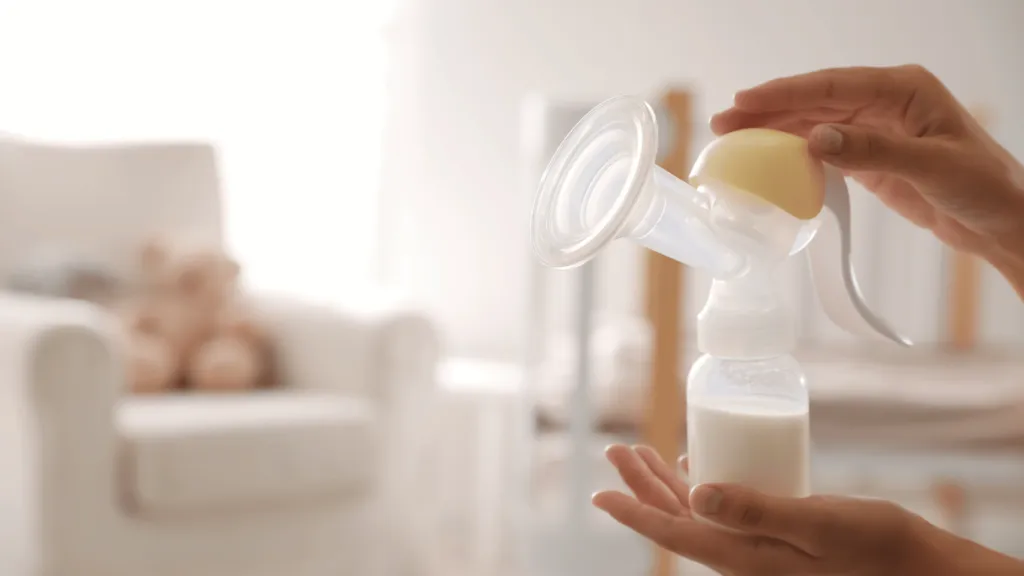
3. Hand Expression and Pumping (Used Carefully)
Here’s something crucial that many mothers get wrong: pumping strategy matters tremendously when dealing with engorgement.
Don’t pump to empty your breasts! This is one of the biggest mistakes mothers make. Completely emptying engorged breasts signals your body to make even more milk, creating a vicious cycle.
Instead, follow this approach:
- Express only enough milk to soften the areola (typically 2-3 minutes)
- Hand expression is often more effective than pumping for engorgement
- Once engorgement resolves (1-2 days), gradually reduce expressing
- Save any expressed milk for later feedings or proper storage
If you need to use a breast pump, choose one that offers gentle suction settings. Many mothers find wearable breast pumps helpful for quick, occasional relief sessions.
4. Cold Therapy Between Feedings
Cold compresses are excellent for reducing inflammation and providing comfort between nursing sessions.
Effective cold therapy methods:
- Cold packs: Apply gel ice packs wrapped in a thin cloth for 15-20 minutes between feedings
- Frozen vegetables: A bag of frozen peas conforms nicely to breast shape
- Cold cabbage leaves: While controversial, many mothers find relief with chilled cabbage leaves placed inside their bra (change every 2 hours; discontinue after 24-48 hours to avoid reducing milk supply)
- Cold compresses: Washcloths soaked in cold water work in a pinch
Create homemade cooling pads by filling a clean diaper or ziplock bag with water, adding a few drops of lavender oil, and freezing. These conform perfectly to breast shape and provide soothing aromatherapy!
5. Warmth Before Feeding (Use Sparingly)
While cold helps reduce swelling, brief warmth before nursing can encourage milk flow.
Safe ways to apply warmth:
- Take a warm shower (2-3 minutes) immediately before nursing
- Apply a warm, moist washcloth to your breasts for just 2-3 minutes
- Lean over a bowl of warm water to let gravity assist milk flow
Do NOT use heat for extended periods or between feedings. Prolonged heat application can actually worsen engorgement by increasing inflammation and fluid accumulation. Limit warmth to just a few minutes immediately before nursing.
6. Gentle Breast Massage
Light massage can help move milk toward your nipple and improve drainage during feeding.
Proper massage technique:
- Start at the chest wall, working toward the nipple
- Use gentle, circular motions—never vigorous pressure
- Massage during nursing to help milk flow
- If massage causes pain, stop immediately and use gentler pressure
Never use: Vigorous massage, hard pressure, or aggressive manipulation, as these can damage breast tissue and worsen inflammation.
7. Proper Support and Clothing
What you wear matters more than you might think when managing engorgement.
- Wear a well-fitting, supportive bra: Contrary to myths, proper support won’t cause mastitis—it helps improve circulation
- Avoid tight bras or underwires: These can create pressure points and worsen blocked ducts
- Choose breathable fabrics: Cotton nursing bras allow air circulation
- Size up if needed: Your breasts may temporarily require a larger size during engorgement
8. Pain Relief Medication
Over-the-counter pain relievers can provide significant relief and are generally safe for breastfeeding mothers.
- Ibuprofen (Advil, Motrin): Reduces both pain and inflammation; typically the first choice (follow package directions or provider guidance)
- Acetaminophen (Tylenol): Helps with pain but doesn’t reduce inflammation (follow package directions)
- Important: Always consult your healthcare provider before taking any medication while breastfeeding
- Never take: Multiple pain medications simultaneously unless specifically directed by your doctor
Relief Methods Comparison
| Method | Effectiveness | Time to Relief | Best Used When |
|---|---|---|---|
| Frequent Nursing | ⭐⭐⭐⭐⭐ Highest | Immediate to 24 hours | Always—first line treatment |
| Reverse Pressure Softening | ⭐⭐⭐⭐⭐ Highest | 1-3 minutes | Before each feeding when areola is hard |
| Cold Therapy | ⭐⭐⭐⭐ High | 15-20 minutes | Between feedings for comfort |
| Hand Expression | ⭐⭐⭐⭐ High | 2-5 minutes | When baby can’t latch due to hardness |
| Gentle Massage | ⭐⭐⭐ Moderate | During feeding | To encourage milk flow while nursing |
| Warm Compress | ⭐⭐⭐ Moderate | 2-3 minutes | Immediately before feeding only |
| Pain Medication | ⭐⭐⭐ Moderate | 30-60 minutes | For pain management alongside other methods |
| Cabbage Leaves | ⭐⭐ Low-Moderate | 1-2 hours | Short-term use only (24-48 hours max) |
Preventing Breast Engorgement
While some degree of fullness is normal when your milk comes in, severe engorgement is often preventable with the right strategies. Here’s what works based on current evidence and clinical experience:
Early Days Strategy (First Week)
- Start breastfeeding immediately: Nurse within the first hour after birth if possible
- Room-in with your baby: Keeping your baby close allows you to respond to early hunger cues
- Feed frequently from day one: Aim for 8-12 feedings in 24 hours, even before your milk comes in
- Avoid unnecessary supplementation: Unless medically necessary, avoid formula or pacifiers in the first weeks
- Learn proper latch early: Work with a lactation consultant to ensure effective milk transfer
- Don’t limit feeding time: Let your baby nurse as long as they want on each breast
Ongoing Prevention
- Maintain consistent feeding schedule: Avoid going longer than 3-4 hours between feedings, even at night initially
- Respond to feeding cues promptly: Don’t wait for crying—watch for early signs like rooting and hand-to-mouth movements
- Empty breasts effectively: Ensure your baby is removing milk well at each feeding
- Make gradual changes: When adjusting feeding schedules, do so slowly over several days
- Plan ahead for separation: When returning to work, establish a pumping routine that mimics your baby’s feeding schedule
- Wean gradually: If stopping breastfeeding, reduce sessions slowly over weeks, not days
Pumping Prevention Tips
If you’re using a breast pump regularly, these strategies help prevent engorgement:
- Pump at the same times your baby would normally feed
- Use properly fitted flanges for effective milk removal
- Maintain your pump schedule consistently, including weekends
- Consider wearable pumps for convenience when away from home
- Learn about getting a breast pump through insurance for quality equipment
With my second baby, I learned to set gentle reminders on my phone for feeding times during the early weeks. This simple step helped me maintain consistency and avoid the painful engorgement I experienced with my first child.
When to Seek Medical Help
While breast engorgement is usually manageable at home, certain situations require professional medical attention. As a nurse, I always emphasize that it’s better to err on the side of caution when it comes to breast health.
- High fever: Temperature above 100.4°F (38°C) that persists or worsens
- Flu-like symptoms: Body aches, chills, extreme fatigue, or feeling generally unwell
- Red, hot, wedge-shaped area: This classic sign may indicate mastitis (breast infection)
- Severe pain: Pain that doesn’t improve with home remedies after 24-48 hours
- Inability to feed: If your baby cannot latch despite trying all softening techniques
- Abnormal discharge: Pus, blood, or unusual discharge from your nipple
- Lump that doesn’t resolve: A persistent hard lump after nursing or pumping
- Decreasing milk supply: Noticeable drop in milk production despite engorgement
- Baby not getting enough milk: Fewer wet diapers, poor weight gain, or signs of dehydration
Working With Healthcare Professionals
Several professionals can help you manage breast engorgement:
- Lactation Consultant (IBCLC): Expert in all aspects of breastfeeding, can assess latch, positioning, and milk transfer
- Your OB-GYN or Midwife: Can evaluate for complications and prescribe medication if needed
- Primary Care Provider: Can assess for infection and provide treatment
- Pediatrician: Can evaluate your baby’s latch and milk intake
- WIC Breastfeeding Support: Free lactation support for eligible families
Differentiating Engorgement from Other Conditions
| Condition | Key Differences | What to Do |
|---|---|---|
| Engorgement | Both breasts affected, general fullness, low-grade fever if present | Home management with frequent nursing |
| Plugged Duct | Localized hard lump, one area of breast, no fever initially | Frequent nursing, massage, warm compress before feeding |
| Mastitis | One breast, red wedge-shaped area, high fever, flu-like symptoms | Contact healthcare provider immediately; may need antibiotics |
| Breast Abscess | Severe pain, pus, swelling that doesn’t improve with treatment | Urgent medical care required; may need drainage |
Related Resources & Support
Managing breast engorgement is just one aspect of your breastfeeding journey. Here are additional resources that may help:
Breast Pump Resources
Additional Support
Remember, you’re not alone in this journey. Many mothers experience challenges with breastfeeding, and seeking support is a sign of strength, not weakness. Whether you’re dealing with engorgement, looking for the right breast pump, or navigating other breastfeeding challenges, professional support and quality equipment can make all the difference.
Final Thoughts
Breast engorgement, while uncomfortable and sometimes painful, is a temporary challenge that most breastfeeding mothers can overcome with the right knowledge and techniques. The key is to act quickly when symptoms appear, use evidence-based relief methods, and don’t hesitate to seek professional help when needed.
From my experience both as a nurse and a mother, I can assure you that this difficult period will pass. Most mothers find significant relief within 24-48 hours of implementing proper management techniques, and complete resolution typically occurs within two weeks as your milk supply regulates.
Remember these essential points:
- Frequent, effective nursing is your most powerful tool
- Never pump to completely empty engorged breasts
- Use cold therapy between feedings, warmth only briefly before feeding
- Reverse pressure softening can make latching much easier
- Don’t wait to seek help if symptoms worsen or don’t improve
Your breastfeeding journey is unique, and while engorgement may be a bumpy start, millions of mothers have successfully navigated this challenge and gone on to enjoy fulfilling breastfeeding relationships with their babies. You’ve got this, mama!
At Breast Pumps Hub, we’re committed to supporting you throughout your breastfeeding journey. Explore our comprehensive guides, read real reviews from mothers like you, and find the equipment and information you need to succeed. Visit our homepage for more resources.
Medical References & Sources
This article is based on current medical evidence and peer-reviewed research. The following sources informed our recommendations:
Medical Disclaimer: This article is for informational purposes only and is not a substitute for professional medical advice, diagnosis, or treatment. Always seek the advice of your healthcare provider with any questions you may have regarding a medical condition. The author and publisher are not responsible for any adverse effects or consequences resulting from the use of any suggestions, preparations, or procedures discussed in this article.