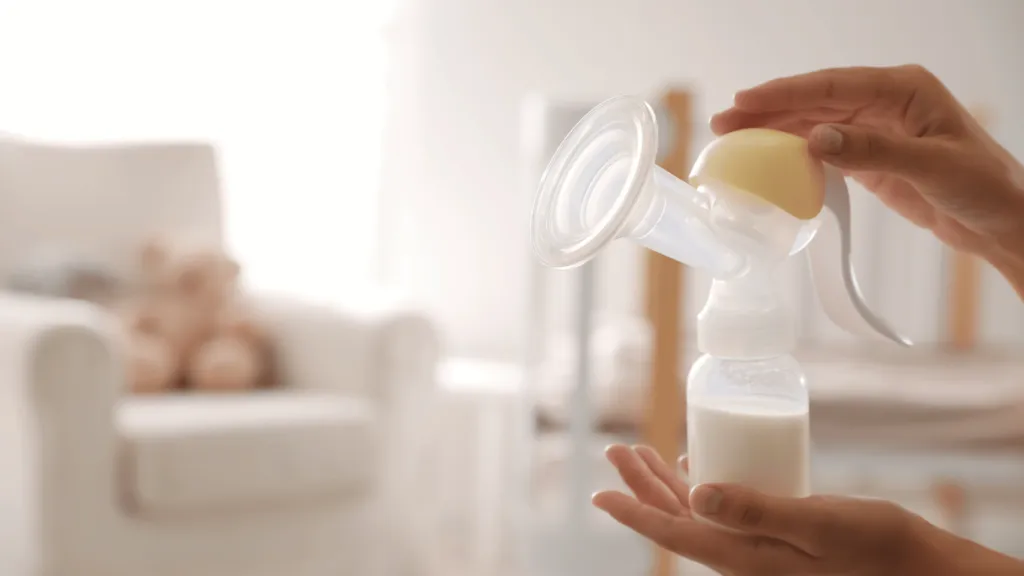
How To Pump Like A Pro: A Step-By-Step Guide For Beginners
Because every drop of your liquid gold matters, and your comfort matters even more — let me show you exactly how I learned to pump efficiently after struggling through countless uncomfortable sessions with my first baby.

I’ll never forget my first pumping session. I sat there awkwardly, the flanges felt wrong, the suction was too high, and after 20 minutes I’d barely collected an ounce. I remember thinking, “There has to be a better way!” And there absolutely is.
After two babies, countless pumping sessions (including during my nursing shifts!), and testing dozens of breast pumps for this site, I’ve learned that pumping like a pro isn’t about getting the most milk every single time — it’s about comfort, consistency, and smart technique. Whether you’re exclusively pumping, building a freezer stash, or pumping at work, this guide will walk you through everything I wish someone had told me from day one.
🧼 Step 1: Prepare Yourself & Your Pump
🧽 Wash Your Hands First
I know this sounds basic, but trust me on this one. Before I touch any pump parts or my breast, I always wash my hands thoroughly with soap and warm water for at least 20 seconds. This simple step prevents contamination and keeps our precious milk safe for our little ones.
During my nursing career, I’ve seen too many cases of preventable infections, so I never skip this step — even when I’m exhausted at 3 AM.
🧴 Sterilize All Pump Parts
Here’s what I do, especially for that first session of the day:
- Breast shields (flanges) — these are the cone-shaped pieces that fit over your breast
- Valves or membranes — the tiny parts that create suction (and yes, they’re easy to lose!)
- Bottles or milk containers — where your liquid gold collects
I personally rinse everything in cool water first (hot water can make milk proteins stick), then wash with hot soapy water using a dedicated bottle brush, and let everything air dry on a clean dish rack. For deeper cleaning, I use steam bags or my microwave sterilizer once a day — it takes just 3 minutes and gives me peace of mind.
💡 My Pro Tip: I keep two sets of pump parts so I can always have clean ones ready. When one set is drying, I’m using the other. This simple hack saved my sanity when I was pumping every 3 hours!
🪑 Create Your Comfortable Pumping Sanctuary
Ladies, this changed everything for me. I used to just plop down anywhere with my pump, but once I created an actual comfortable pumping spot, my let-down improved dramatically.
Here’s what I include in my pumping space:
- A comfortable chair with solid back support (I use my nursing glider)
- A large water bottle — hydration is crucial!
- My phone with photos of my babies
- A small table or cart to keep pump parts organized
- Snacks (because pumping makes me hungry!)
- A cozy blanket or shawl for privacy and comfort
Remember, stress literally inhibits your milk let-down reflex. The more relaxed you are, the better your body responds. I learned this the hard way during my stressful hospital shifts!
🔧 Step 2: Assemble Your Breast Pump Correctly
📍 Follow Your Pump’s Manual (Yes, Really!)
I’ve tested everything from electric pumps to manual pumps, and each one has its quirks. But here’s the basic assembly that most electric pumps follow:
- Attach the valves to the breast shields — make sure they’re seated properly or you’ll lose suction
- Connect the tubing (if your pump uses it) — check for any milk or moisture buildup
- Attach the bottles or collection containers securely — nobody wants a milk spill!
Everything should click or twist into place firmly. If I can easily pull something apart, it’s not assembled correctly. Loose connections mean weak suction, and weak suction means frustrated pumping sessions.
⚠️ Common Mistake I Made: I used to forget to check if the little white membranes were installed correctly. These tiny parts are crucial for creating suction! If your pump suddenly stops working well, check these first.
🤱 Step 3: Position Yourself & the Flange
🪑 Sit Upright & Truly Relax
This is where I see so many moms struggle (myself included at first!). Slouching forward trying to see the bottles actually reduces milk flow. Instead, I sit upright with good back support, sometimes placing a pillow behind my lower back.
Some of my favorite relaxation techniques:
- A warm compress on my shoulders before starting
- Deep breathing exercises (I count: breathe in for 4, hold for 4, out for 4)
- Looking at photos or videos of my babies
- Listening to calming music or a favorite podcast
I’ve pumped in hospital break rooms, airport bathrooms, and even my car — comfort isn’t always about the perfect environment, it’s about your mindset too.
📏 Center Your Nipple in the Flange (This Is CRUCIAL!)
Getting the right flange size was honestly life-changing for me. With my first baby, I didn’t even know flanges came in different sizes! I used whatever came with my pump and suffered through painful sessions.
Here’s how to position correctly:
- Place the flange centered over your breast
- Your nipple should be in the middle of the tunnel
- There should be a small amount of areola pulled in, but not too much
- Your nipple should move freely during pumping without rubbing the sides
| Signs Your Flange Fits Right | Signs Your Flange Is Wrong |
|---|---|
| Nipple moves freely in the tunnel | Nipple rubs against the sides |
| Little to no pain during pumping | Pinching, pulling, or blanching |
| Small amount of areola pulled in | Too much or no areola movement |
| Good milk output over time | Decreasing output despite trying |
| Comfortable for full session | Can’t wait for session to end |
I eventually ordered different flange sizes (ranging from 21mm to 27mm) and tested each one. The right size made such a difference — my output increased and pumping became comfortable instead of something I dreaded.
⚙️ Step 4: Turn On the Pump & Set Suction
📢 Always Start on Low Suction
Here’s something I learned after making this mistake too many times: starting on high suction doesn’t mean more milk faster. In fact, it can actually inhibit your let-down!
I always begin on the let-down or massage mode (most modern top electric pumps have this). This mode mimics a baby’s initial quick, light suckling pattern — the one that triggers your milk ejection reflex. It’s usually faster cycles with lighter suction.
When I feel that familiar tingling sensation (sometimes I don’t even feel it, but I see milk starting to spray), that’s when I know my let-down has happened.
📈 Gradually Increase Suction
Once milk starts flowing, I slowly increase the suction to the highest comfortable level. And I want to emphasize comfortable. Pumping should never hurt!
Here’s my rule: The most effective suction is the highest level you can use comfortably for the entire session. For me, that’s usually around level 6 or 7 on my pump (which goes up to 12). Going higher doesn’t help — it just makes me tense up.
💡 My Experience: I noticed my best output comes from finding that sweet spot where the suction feels strong but not painful. Some days it’s higher, some days it’s lower — and that’s completely normal! Our bodies change daily based on stress, hydration, sleep, and hormone fluctuations.
⏱️ Step 5: During Your Pumping Session
⏱️ How Long Should You Pump?
This is one of the most common questions I get! For me, a typical session lasts about 15-20 minutes when I’m double pumping (both breasts at once). When I was exclusively pumping with my second baby, I found that:
- 10-15 minutes is usually enough once my supply was established
- 20-25 minutes worked better in the early weeks when building supply
- Adding 2-5 minutes after milk stops flowing can help stimulate more production
I’m a huge fan of double pumping with a double electric breast pump. It saves so much time, and studies show it can actually increase overall output because stimulating both breasts simultaneously triggers more prolactin release. When I’m at work, this time-saving is essential!
🔄 Switch Modes If You Need To
Most electric pumps have two modes:
- Let-down mode: Faster, lighter cycles (like rapid tapping)
- Expression mode: Slower, stronger cycles (like slow, deep pulls)
I typically start in let-down mode, switch to expression once milk flows, but here’s a trick I discovered: sometimes I’ll switch back to let-down mode mid-session if the milk slows down. This can trigger a second let-down! Some moms experience multiple let-downs during a session, especially in the morning when prolactin levels are highest.
🧠 Stay Relaxed (I Know, Easier Said Than Done!)
Stress and tension literally block oxytocin — the hormone responsible for let-down. I learned this during my nursing education, but experiencing it firsthand really drove it home.
Here’s what helps me relax:
- Shoulder rolls — I do these before and during pumping
- Deep breathing — counting my breaths keeps me focused
- Looking at baby photos/videos — seeing my babies’ faces triggers oxytocin naturally
- Warm compress — I keep a heating pad nearby for tense sessions
- Gentle breast massage — stroking from the outer breast toward the nipple
- Podcast or music — distraction can actually help!
On particularly stressful work days, I’ve even done breathing exercises while pumping in the hospital break room. My coworkers thought I was meditating — and technically, I was!
📦 Step 6: Ending Your Pumping Session Properly
📉 Reduce Suction Before Turning Off
This is something I wish I’d known from the beginning! Never just yank the flanges off while the pump is still running on full suction. Trust me, I did this once and the discomfort taught me the lesson permanently.
Here’s my ending routine:
- Turn the suction down gradually or turn off the pump completely
- Gently slip a clean finger between the flange and my breast to break the seal
- Remove the flanges slowly and carefully
This prevents soreness, tissue damage, and those unpleasant red rings that used to show up around my breasts after pumping. Your breast tissue is delicate — treat it gently!
🍼 Store Your Milk Safely
As a nurse, safe milk storage is something I’m passionate about. Here’s my system:
- Label immediately — I write the date and time on every container before storing
- Use proper storage containers — breast milk storage bags or BPA-free bottles
- Cool before combining — if adding to already cold milk, cool the fresh milk first
- Store in the back — not in the refrigerator or freezer door where temperature fluctuates
| Storage Location | Duration | My Tips |
|---|---|---|
| Room Temperature | 4 hours (ideal) | I use this for the next feeding |
| Refrigerator | 4 days (ideal) | Store in back, not door |
| Freezer | 6 months (best quality) | Freeze flat for easy stacking |
| Deep Freezer | 12 months | Perfect for long-term stash |
I organize my freezer stash by date, using the oldest milk first. This “first in, first out” method ensures we’re always using the freshest milk possible.
🧼 Step 7: Clean After Every Session
👉 My Cleaning Routine (It’s Not As Bad As It Sounds!)
I’ll be honest — cleaning pump parts was one of my least favorite tasks, especially in those early sleep-deprived weeks. But I developed a system that makes it quick and painless.
Immediately after pumping, I:
- Rinse with cool water first — this prevents milk proteins from sticking (hot water “cooks” the proteins and makes them harder to remove)
- Wash in warm, soapy water — I use a dedicated bottle brush set just for pump parts
- Rinse thoroughly again — no soap residue left behind
- Let air dry completely — on a clean dish rack or drying mat
For sanitizing, I do a deep clean once a day (usually the last session of the day) using either:
- Microwave steam bags (3 minutes, so easy!)
- Electric sterilizer
- Boiling water for 5 minutes
- Dishwasher sanitize cycle (if parts are dishwasher-safe)
💡 My Time-Saving Hack: I keep a basin in my sink specifically for pump parts. After each session, I rinse everything and toss it in the basin with soapy water. At the end of the day, I wash everything at once. This saved me so much time during my maternity leave!
⚠️ Replace Parts Regularly! Those little valves and membranes wear out faster than you think. I replace mine every 4-6 weeks, or sooner if I notice reduced suction. Check your pump manual for specific recommendations.
💡 Pro Tips to Pump Like a Pro (From My Personal Experience)
✨ Advanced Techniques That Actually Work
💆 Massage & Warm Compress
This technique increased my output by at least an ounce per session! Before pumping, I:
- Apply a warm compress (or just drape a warm, damp washcloth) over my breasts for 2-3 minutes
- Gently massage from the outer breast toward the nipple using circular motions
- Continue light massage during pumping when milk flow slows down
The warmth helps dilate milk ducts, and massage helps move milk toward the nipple. Think of it like warming up before exercise — it prepares your body for what’s coming!
👐 Double Pump Whenever Possible
Switching to a double electric breast pump was a game-changer for me. Here’s why:
- Saves time: 15 minutes vs. 30 minutes for single pumping
- Increases output: Studies show bilateral pumping can increase milk volume by up to 18%
- Boosts prolactin: Stimulating both breasts simultaneously triggers higher hormone levels
- More efficient: Perfect for working moms with limited break time
When I went back to work, double pumping during my 20-minute breaks was essential. I couldn’t have maintained my supply without it!
📝 Track Your Sessions
As a nurse, I love data! I tracked my pumping sessions for the first three months and discovered so many helpful patterns:
| What I Tracked | Why It Helped |
|---|---|
| Time of day | Found my morning sessions yielded 2x more milk! |
| Suction level | Discovered my “sweet spot” settings |
| Output amount | Noticed patterns based on hydration and stress |
| What I ate/drank | Realized oatmeal really did boost my supply! |
| How I felt | Confirmed stress directly affected output |
I used a simple notes app on my phone, but there are also dedicated breastfeeding tracking apps if you prefer something more structured.
👚 Invest in a Hands-Free Pumping Bra
This was my second-best purchase after the pump itself! A good hands-free pumping bra allows me to:
- Relax my shoulders and arms (no more holding flanges!)
- Massage my breasts during pumping
- Use my phone or laptop
- Eat a snack (pumping makes me hungry!)
- Just breathe and relax without tension
I actually keep two — one at home and one in my work bag. They’re that essential to my pumping routine!
⏰ Power Pumping for Supply Boosts
When I needed to increase my supply (like before going back to work), I used a technique called “power pumping.” Here’s how it works:
- Pump for 20 minutes
- Rest for 10 minutes
- Pump for 10 minutes
- Rest for 10 minutes
- Pump for 10 minutes
I did this once a day for 3-5 days, and it mimics cluster feeding to signal my body to produce more milk. It worked for me, though it’s time-consuming, so I saved it for weekends!
🧘 Be Patient — Your Body Learns
This might be the most important tip of all. When I first started pumping with my first baby, I got maybe 1-2 ounces total after 20 minutes. I was so discouraged! But here’s what I learned:
- Your body needs time to respond to the pump (usually 2-3 weeks)
- Pumping is a learned skill for both you and your breasts
- Output typically increases as you establish a routine
- What you pump doesn’t necessarily reflect your total supply
- Some women respond better to pumps than others — and that’s okay!
By week four, I was getting 4-5 ounces per session. By week eight, I was building a freezer stash. Give yourself grace and time!
🚫 Common Mistakes to Avoid (I’ve Made Them All!)
❌ Mistakes That Sabotaged My Early Sessions
1. Skipping Preparation
I used to just grab my pump and go. Then I’d realize I forgot water, or the parts weren’t clean, or I needed to use the bathroom. Now I set everything up beforehand — it makes such a difference in my stress levels and let-down!
2. Using High Suction Immediately
I thought “more suction = more milk.” Wrong! All I got was sore nipples and a poor let-down. Starting low and building gradually is so much more effective. I learned this the painful way.
3. Ignoring Discomfort
Pumping shouldn’t hurt! If it does, something is wrong — usually the flange size or suction level. I powered through discomfort for weeks before finally addressing it. Don’t be like me — pain is your body’s signal that something needs adjusting!
4. Not Relaxing
I used to pump while stressed about work, responding to emails, or worrying about my to-do list. My output was terrible! Once I started treating pump sessions as “me time” — listening to podcasts, looking at baby photos, practicing deep breathing — everything improved.
5. Comparing My Output to Others
This one really messed with my head. I’d see other moms posting photos of 8-ounce pumping sessions while I was getting 3 ounces. But here’s the truth: everyone’s body is different. Some women are “super responders” to pumps, others aren’t. What matters is that your baby is fed and growing!
6. Not Maintaining My Pump
I didn’t know those little white membranes needed replacing every 4-6 weeks! My pump gradually became less effective, and I thought it was my supply dropping. Nope — just worn-out parts. Now I check and replace parts regularly.
7. Pumping on an Empty Stomach
Your body needs fuel to make milk! I noticed my output was significantly lower when I forgot to eat breakfast or was dehydrated. Now I always have a snack and water bottle with me during pumping sessions.
🔧 Troubleshooting: When Things Don’t Go As Planned
What To Do When You’re Not Getting Much Milk
We’ve all been there — staring at barely an ounce after a 20-minute session. Here’s my troubleshooting checklist:
| Problem | Possible Causes | My Solutions |
|---|---|---|
| Sudden drop in output | Worn pump parts, stress, dehydration, hormones | Replace valves/membranes, drink more water, check if period is coming |
| Painful pumping | Wrong flange size, suction too high, infection | Try different flange sizes, reduce suction, check for plugged ducts |
| No let-down | Stress, distraction, rushing | Look at baby photos, try warm compress, massage, deep breathing |
| Pump losing suction | Loose connections, worn parts, condensation in tubing | Check all connections, replace membranes, dry out tubing |
| One breast produces less | Completely normal! Most women have one “slacker boob” | Start pumping sessions on the lower-producing side |
🏥 When to Reach Out for Professional Help
As a nurse, I’m a big believer in asking for help. Contact a lactation consultant (IBCLC) or your healthcare provider if you experience:
- Severe pain during pumping that doesn’t improve with adjustments
- Signs of infection (red, warm, painful areas; fever; flu-like symptoms)
- Significant sudden drop in supply that doesn’t resolve
- Bleeding or cracked nipples that won’t heal
- Concerns about your baby’s weight gain or feeding
- Persistent clogged ducts or recurring mastitis
I’ve consulted with lactation specialists multiple times throughout my breastfeeding journeys. There’s no shame in getting professional support — it’s what they’re there for!
🎯 Choosing the Right Pump Makes All the Difference
After testing countless pumps for this site, I’ve learned that the “best” pump varies based on your specific needs. Here’s my quick guide:
| Your Situation | I Recommend | Why |
|---|---|---|
| Working full-time | Double electric pump | Fast, efficient, hands-free capability |
| Exclusively pumping | Hospital-grade pump | Built for frequent use, most effective |
| Occasional pumping | Manual or single electric | Affordable, portable, quiet |
| Traveling/on-the-go | Portable/wearable pump | Discreet, wireless, rechargeable |
| Budget-conscious | Check insurance coverage first! | Most US insurance covers pumps |
I personally use different pumps for different situations. At home, I love my double electric. At work, I use a portable pump for convenience. For occasional outings, I keep a manual pump in my car. Having options gives you flexibility!
❓ Your Questions Answered
How often should I pump?
It depends on your goals! If exclusively pumping, aim for every 2-3 hours (8-12 times per day) in the early weeks, then gradually space out to every 3-4 hours. If building a stash, add 1-2 extra sessions per day. If pumping at work, pump as often as your baby would typically feed.
How much milk should I expect to pump?
This varies widely! In the early days, 1-2 ounces per session is normal. Once established, many moms get 2-5 ounces per breast per session. Remember: what you pump doesn’t reflect your total supply — babies are more efficient than pumps!
Can I refrigerate pump parts between sessions?
The CDC recommends washing parts after each use. However, many moms (including myself during work days) refrigerate parts in a sealed bag between sessions to save time. I only do this for 1-2 sessions, then wash thoroughly. Talk to your pediatrician about what’s right for your situation.
Why do I get more milk in the morning?
Prolactin levels are highest in the early morning hours! This is why most women have more milk between 2-6 AM. I always schedule my power pumping sessions in the morning for this reason.
Is it normal for pumping to feel awkward at first?
Absolutely! I felt so weird and robotic during my first sessions. It takes time to get comfortable with the sensation, the sound, and the process. Give yourself a few weeks — it becomes second nature!
💕 Final Thoughts From One Pumping Mama to Another
If you take nothing else from this guide, remember this: pumping like a pro isn’t about getting the most milk every single time. It’s about finding what works for YOUR body, YOUR schedule, and YOUR family.
I’ve had sessions where I pumped 6 ounces and felt like a superstar. I’ve also had sessions where I got barely an ounce and felt defeated. Both experiences are normal. Both are okay.
Some days your let-down will be instant. Other days you’ll sit there for 5 minutes waiting. Some mornings you’ll wake up engorged with milk. Other mornings you’ll feel empty. Our bodies aren’t machines — they’re affected by stress, sleep, hormones, hydration, and a million other factors.
What matters most is consistency, proper technique, and being kind to yourself. Give your body time to learn. Experiment with different wearable pumps like Elvie wearable, Willow 3.0 , Momcozy M5, flange sizes, and routines until you find your groove.
And please, PLEASE don’t suffer through painful pumping sessions. If something hurts, adjust it. You deserve comfort and efficiency, not pain and frustration.
Whether you’re pumping for a year or just a few months, whether you’re exclusively pumping or just building a small stash, whether you’re getting 2 ounces or 10 ounces per session — you’re doing an amazing job. Your dedication to feeding your baby is beautiful, and I’m honored to share what I’ve learned with you.
Here’s to comfortable pumping sessions, efficient let-downs, and all the liquid gold we’re creating for our babies! 💕
~ Charlotte Rose
Mom of 2, Professional Nurse, and Fellow Pumping Warrior
📧 Need More Help?
Check out our other comprehensive guides: