
Breast Pump Flange Size Calculator
Finding the right breast pump flange size is essential for comfortable and efficient pumping. Our calculator helps you determine your perfect flange fit in seconds using our comprehensive breast pump flange size chart. A properly fitted flange ensures comfortable pumping sessions and optimal milk output.
Flange Size Calculator
Why Flange Size Matters
The right flange size makes all the difference. Here are few things to consider;- Comfort: Prevents pain, irritation, and discomfort during pumping sessions.
- Efficiency: Ensures optimal milk extraction for a productive pumping experience.
- Breast Health: Reduces the risk of nipple damage and clogged ducts, promoting healthy milk production.
Measure Your Nipple Diameter
Ready to use the Flange Size Calculator? Here’s how to measure your nipple:- Grab a Ruler or Measuring Tape: Opt for one with millimeter (mm) markings for the most accurate results.
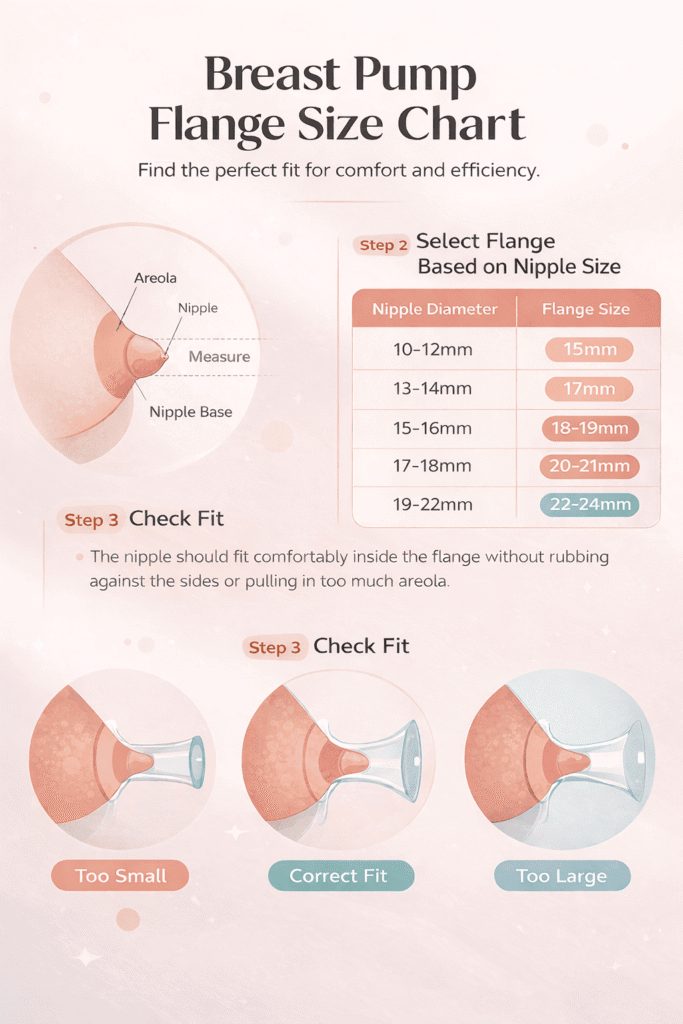
- Measure the Base: Locate the widest part of your nipple (excluding the dark area around it, called the areola).
- Record the Measurement: Note down the measurement in millimeters (mm).
Using the Flange Size Calculator
Our user-friendly calculator makes finding your perfect fit a breeze:- Enter Your Nipple Diameter: Input the measurement you obtained in step 3.
- Choose Your Unit: Select millimeters (mm) to match your measurement.
- Calculate Flange Size: Click the “Calculate” button to receive your recommended flange size.
Understanding Your Results
The calculator adds 4mm to your nipple diameter to recommend the optimal flange size. This extra space allows for comfortable nipple movement during pumping, preventing friction and compression.Benefits of Using the Flange Size Calculator
- Precise Measurements: Get accurate recommendations for a perfect flange fit.
- Quick and Easy: Saves you time and effort in finding the right size.
- Flexible Units: Supports different measurement units (millimeters only).
Finding the Perfect Pumping Experience
- Fine-Tuning: If the recommended size feels off, try a size up or down for a more comfortable fit.
- Comfort is Key: The flange should fit snugly without causing pain or discomfort.
- Lactation Consultant: Seek guidance from a lactation consultant for personalized advice if needed.
Frequently Asked Questions
Everything you need to know about breast pump flange sizing
- Measure when your breast is relaxed, ideally before pumping or nursing
- Use a ruler or measuring tape to measure the widest part of your nipple at the base
- Add 2-4 millimeters to your measurement to find your ideal flange size
- Measure both breasts as they may differ in size
- Step 1: Gently stimulate your nipple to make it erect
- Step 2: Hold the measuring tape perpendicular to your breast
- Step 3: Align the 0 mark at the base of your nipple where it meets the areola
- Step 4: Measure the diameter across the widest part of your nipple
- Step 5: Record the measurement in millimeters
- Step 6: Repeat for the other breast if needed
- Nipple rulers: Many breast pump brands include printable nipple rulers or sizing cards with holes to measure your nipple diameter
- Household items: Use coins for rough estimation (though not as accurate)
- Regular ruler: A standard ruler with millimeter markings works perfectly
- Silicone measuring tools: Some brands offer silicone nipple measuring tools specifically designed for this purpose
- Prevents nipple damage: Wrong sizes can cause friction, rubbing, and painful nipple trauma
- Maximizes milk output: Proper fit ensures efficient milk removal, signaling your body to maintain supply
- Reduces pain: Correct sizing eliminates discomfort during pumping sessions
- Prevents clogged ducts: Improper fit can block milk flow, leading to painful clogs and mastitis
- Improves pumping efficiency: You’ll be able to express more milk in less time
- Supports long-term breastfeeding: Comfortable pumping helps you maintain your breastfeeding journey
| Nipple Diameter (mm) | Recommended Flange Size (mm) |
|---|---|
| 13-15 | 17-19 |
| 16-17 | 20-21 |
| 18-19 | 22-23 |
| 20-21 | 24-25 |
| 22-23 | 26-27 |
| 24-26 | 28-30 |
- Comfort: Pump comfortably with less pain and irritation
- Efficiency: Remove more milk efficiently in shorter pumping sessions
- Prevention: Avoid nipple irritation, damage, or tissue trauma
- Milk supply: Prevent reduced milk output due to poor fit
- Safety: Reduce risk of clogged ducts and mastitis
- Sharp pain or uncomfortable rubbing against the nipple sides during pumping
- Nipple turns red, white, or purple after pumping (sign of restricted blood flow)
- Nipple feels compressed or pinched inside the tunnel
- Visible friction marks or irritation on your nipple
- Your nipple can’t move freely within the flange tunnel
- Decreased milk output despite adequate milk supply
- Cracking or bleeding of nipple tissue
- Too much areola being pulled into the tunnel (more than a few millimeters)
- Poor suction seal causing air leaks
- Inefficient milk removal even with proper pump settings
- Nipples moving too freely with excessive space around them
- Swelling around your areola after pumping
- Painful stretching sensation
- Your breast doesn’t feel emptied after a full pumping session
- Your pumping comfort changes or becomes painful
- Milk output suddenly decreases
- You’re in a different postpartum stage (early weeks vs. months later)
- You switch pump brands or flange materials
- Your breast size changes significantly
- You notice signs of incorrect fit
- Every 4-6 weeks during the first few months postpartum
- Experiment with silicone flange inserts to fine-tune the fit
- Try both sizes and compare which feels more comfortable
- Assess which size gives you better milk output
- Consider that different pump brands may fit differently
- Standard flanges are typically 24mm, but many mothers need different sizes
- Flange compatibility varies between brands
- Some brands offer a wider range of sizes than others
- Wearable pumps often have different sizing requirements than traditional pumps
- Order replacement flanges directly from the manufacturer
- Use silicone inserts to adjust the fit of your existing flanges
- Try flanges from different compatible brands
- Consult a lactation consultant (IBCLC) for personalized sizing advice
- Check if your insurance covers replacement parts
- Purchase universal flange inserts that work with multiple pump brands
- More affordable option
- Made of soft silicone for added comfort
- Great for trying different sizes without buying multiple flanges
- Can be used to customize fit between standard sizes
- May feel softer and more gentle on sensitive skin
- Ideal if you know your exact size
- Hard plastic flanges may provide more consistent suction
- Some mothers get better milk output with hard flanges
- Easier to clean without removing inserts
- C – Centered: Your nipple is centered in the tunnel
- O – Only a little areola: Only a small amount of areola should be pulled in
- M – Motion: Your breast moves gently and rhythmically with the pump
- F – Free from pain: No pain, pinching, or discomfort during pumping
- Y – You’re empty: Your breasts feel fully drained after pumping
Flange Size Chart
To help you better understand flange sizing, here’s a flange size guide and table with the standard flange sizes and their corresponding nipple diameters:
| Nipple Diameter (mm) | Recommended Flange Size |
|---|---|
| 15 – 16 mm | 19 mm |
| 17 – 18 mm | 21 mm |
| 19 – 20 mm | 24 mm |
| 21 – 22 mm | 27 mm |
| 23 – 24 mm | 30 mm |
This chart provides a general guideline to help you find the right size flange. Keep in mind that every body is different, so you may need to adjust slightly based on your comfort level.
Important Disclaimer
This breast pump flange size calculator is provided as an educational tool to help you estimate the appropriate flange size for your breast pump. The measurements and recommendations provided are for informational purposes only and should not be considered medical advice.
We strongly recommend:
- Consulting with a certified lactation consultant (IBCLC) for personalized flange fitting and sizing guidance
- Testing different sizes to find what feels most comfortable and provides optimal milk output
- Monitoring your comfort level and milk production when trying new flange sizes
- Seeking professional medical advice if you experience pain, nipple damage, or decreased milk supply
- Following your breast pump manufacturer’s specific sizing recommendations
Limitation of Liability: By using this calculator, you acknowledge that the results are estimates based on general guidelines. We do not guarantee the accuracy, completeness, or suitability of the information provided. We are not liable for any decisions made based on this calculator or for any damages resulting from its use.
Medical Disclaimer: This calculator does not replace professional medical advice, diagnosis, or treatment. Always seek the advice of your physician, lactation consultant, or other qualified healthcare provider with any questions you may have regarding breastfeeding, pumping, or flange sizing. Never disregard professional medical advice or delay seeking it because of information obtained from this calculator.
If you experience persistent pain, nipple trauma, plugged ducts, mastitis, or significant changes in milk supply, please consult with a healthcare professional or lactation consultant immediately.