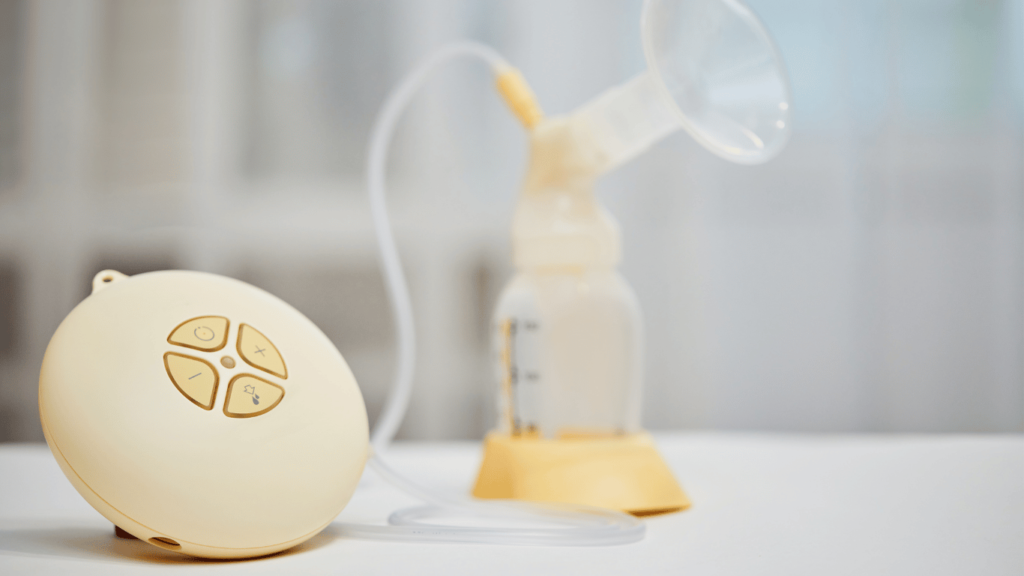
Breast pump usage has become nearly universal among breastfeeding mothers in the United States, driven by workforce participation, technological innovation, and expanding insurance coverage. This comprehensive resource compiles the latest statistics from government agencies, peer-reviewed research, and industry analysis to provide journalists, healthcare professionals, and parents with accurate, citation-worthy data on breast pump trends, usage patterns, and market dynamics.
📊 Key Breast Pump Statistics (Quick Facts)
91%
of U.S. breastfeeding mothers have used a breast pump
68.9%
of U.S. mothers with children under 6 are in the labor force
$3.51B
global breast pump market size in 2025
21 weeks
average increase in breastfeeding duration with pump use
🔍 Breast Pump Usage Statistics
Overall Usage Prevalence
91% of U.S. mothers who initiated breastfeeding reported using a breast pump to express milk. This near-universal adoption demonstrates how integral pumping has become to modern infant feeding strategies.
Source: Yale School of Medicine, 2024
48.5% of infants received pumped or expressed breast milk in the first 2 months, according to CDC data. This percentage remains substantial through the first 6 months and beyond, reflecting widespread adoption of expressed milk feeding.
Source: CDC Infant Feeding Practices Study II
83.2% of U.S. infants born in 2019 initiated breastfeeding, with 55.8% still receiving some breast milk at 6 months. Many of these families rely on pumping to maintain breastfeeding duration.
Source: CDC Breastfeeding Report Card, 2022
Exclusive Pumping
5.6-6.9% of mothers who provide breast milk do so exclusively through pumping without ever feeding directly at the breast. While this represents a smaller percentage of feeding patterns, it reflects an important subset of mothers who face unique challenges with latching, premature births, or personal circumstances.
Source: NIH/PMC Study, 2017
💼 Working Mothers & Pumping at Work
25% of women returned to work within two weeks of giving birth, with three-quarters citing financial hardship as the primary reason. This short maternity leave makes breast pump access essential for continued breastfeeding.
Source: Global Market Insights, 2024
Workplace Support & Challenges
85%
of working mothers believe their employer’s maternity plans meet their needs (up from 73% in 2018)
83%
of mothers still experience workplace stigma around pumping
69%
of working mothers have workplace pumping policies
33%
lack reliable access to a lactation space at work
The PUMP for Nursing Mothers Act (effective April 2023) requires employers of all sizes to provide reasonable break time and a private space (not a bathroom) for pumping. However, only 55% of breastfeeding employees understand their legal protections under this federal law.
Source: Mamava & Medela State of Breastfeeding Survey, 2025
💰 Insurance Coverage & The Affordable Care Act Impact
The Affordable Care Act (ACA) mandates that most health insurance plans cover breast pumps at no cost as a preventive service under Section 2713, which became effective for non-grandfathered plans on August 1, 2012.
Source: U.S. Department of Health and Human Services
Following the 2012 ACA reform, breast pump claims increased by 183.4 per 1,000 live births for women with private insurance. However, Medicaid enrollees initially saw a decrease until the 2014 Medicaid expansion, which increased claims by 119.4 per 1,000 live births.
Source: NIH/PubMed – Preventive Medicine, 2021
Every additional 10 breast pump claims per 1,000 live births was associated with:
- 1.08 percentage point increase in breastfeeding initiation
- 1.79 percentage point increase in breastfeeding for 4+ weeks (private insurance)
- 2.05 percentage point increase in breastfeeding for 4+ weeks (public insurance)
Source: Preventive Medicine Journal, 2021
Coverage Gaps and Limitations
While the ACA requires coverage,
insurance companies have latitude in determining which pump types are covered. Some plans only cover manual pumps rather than electric pumps, and “grandfathered” plans (those existing before the ACA) are not required to comply with breastfeeding coverage mandates.
Source: NIH/PMC – Clinical Lactation, 2015
🌈 Racial and Ethnic Disparities in Breast Pump Access
Nationally, the largest racial disparity in breastfeeding initiation is 16.7 percentage points between infants of Asian mothers (highest) and Black mothers (lowest), according to 2019 birth certificate data analyzing over 3.7 million births.
Source: CDC MMWR, 2021
Systemic Barriers Facing Black Mothers
Facilities in zip codes with >12.2% Black residents were significantly less likely to implement breastfeeding-supportive practices:
- 46.0% supported early breastfeeding initiation vs. 59.9% in other areas
- 13.1% limited supplementation vs. 25.8% in other areas
- 27.7% offered rooming-in vs. 39.4% in other areas
Source: CDC MMWR / PubMed, 2014
The Yale study found that breast pump use showed the greatest benefit for Black and Native American women, suggesting that ensuring equitable access to pumps could help address known inequities in breastfeeding duration rates.
Source: Yale School of Medicine, 2024
🔧 Breast Pump Types & Technology Preferences
Electric vs. Manual vs. Wearable
| Pump Type |
Market Share 2024 |
Key Benefits |
| Electric Pumps |
49-61.2% |
Fastest expression, adjustable suction, hospital-grade options |
| Battery-Powered |
58.7% of wearables |
Portable, no power outlet needed, hands-free capability |
| Wearable/Cordless |
18-20% (fastest growing) |
Discreet, hands-free, mobile functionality |
| Manual Pumps |
7-15% |
Affordable, portable, silent operation |
Over 70% of breastfeeding mothers in high-income countries use electric pumps, according to CDC reports. Electric pumps dominate due to efficiency, adjustable settings, and time savings.
Source: Market Data Forecast, 2024
Wearable Pump Revolution
The global wearable breast pump market reached $596.4 million in 2024 and is projected to grow to $975.5 million by 2030, representing a CAGR of 8.71%.
Source: Grand View Research, 2024
North America accounts for 53.6% of the global wearable pump market, driven by high disposable income, awareness campaigns, and the growing number of employed women.
Source: Grand View Research, 2024
2025-2026 Trending Technologies
Smart App Integration
AI-Powered Suction Control
Ultra-Slim Wearable Designs
Silent Motor Technology
Closed-System Safety
🏥 Hospital-Grade vs. Personal Use
61.3% of the breast pump market consists of hospital-grade applications, with these pumps primarily used in NICUs for premature infants and mothers with lactation challenges.
Source: Grand View Research, 2024
79.7% of breast pump sales are for personal/home use, bolstered by insurance mandates under the Affordable Care Act that cover at least one electric pump per birth.
Source: Mordor Intelligence, 2024
Over 85% of U.S. Level III and IV NICUs now exclusively use closed-system pumps to prevent bacterial contamination in expressed milk for vulnerable preterm infants.
Source: Market Data Forecast, 2024
📈 Breast Pump Market Growth & Industry Trends
Global Market Size
| Year |
Market Value |
CAGR |
| 2024 |
$1.3 – $3.2 billion |
— |
| 2025 |
$3.5 billion |
8.4 – 9.3% |
| 2030 (Projected) |
$5.5 – $6.0 billion |
8.7 – 9.3% |
| 2033 (Projected) |
$6.96 – $7.6 billion |
8.6 – 9.3% |
Note: Market size estimates vary by research firm methodology. Multiple credible sources cited throughout this document.
Regional Market Leadership
44.9%
North America market share (2024)
29.2%
Europe market share (2024)
10.8%
Asia-Pacific CAGR (fastest growing)
47.7%
of sales through online channels (2024)
Single vs. Double Electric Pumps
Double electric pumps save approximately 2 hours per day compared to single pumping, according to Medela research. They allow mothers to pump both breasts simultaneously, cutting pumping time in half.
Source: Medela Research / Milk N Mamas, 2021
Mothers who double-pumped produced 18% more milk volume on average than those who single-pumped each breast, with higher fat content (8.3% vs. 7.3%).
Source: Medela Clinical Study, 2021
Research shows double pumping results in
approximately 20% more milk output due to simultaneous bilateral breast stimulation, which increases prolactin levels more effectively than sequential pumping.
Source: Spectra Baby USA Research, 2021
Closed vs. Open System Pumps
Closed-system pumps dominated with 65.9-89.3% market share in 2024. These pumps incorporate barriers preventing milk backflow into the motor, reducing contamination risks and making them suitable for multiple users.
Source: Global Market Insights, 2024
🎯 Impact on Breastfeeding Duration
Breast pump use is associated with 21 additional weeks of breastfeeding on average compared to mothers who don’t use pumps, according to a 2024 Yale University study analyzing data from over 19,000 U.S. mothers.
Source: Yale School of Medicine / U.S. News, 2024
The greatest benefit was observed among Black and Native American women, suggesting that ensuring access to breast pumps could help address known inequities in breastfeeding duration rates.
Source: Yale School of Medicine Study, 2024
👶 Pumping Patterns & Duration Statistics
The average breastfeeding mother who pumps spends 15-20 minutes per pumping session, though some mothers may need up to 30 minutes to fully express breast milk. Frequency varies based on infant age, time of day, pump quality, and individual physiology.
Source: Aeroflow Breastpumps Industry Research
During the first 12 weeks postpartum,
mothers need at least 120 minutes of quality nipple/breast stimulation per day to establish and maintain a full milk supply, typically achieved through 8-12 pumping sessions of 15-20 minutes each.
Source: Spectra Baby USA / Lactation Research
🌍 Future Trends & Projections (2025-2030)
Emerging Technologies
Smart wearable breast pumps are expected to grow at the highest rate from 2025 to 2030, with features including AI-powered suction adjustment, mobile app tracking, customized suction pattern, headting technologies and real-time pressure monitoring.
Source: Grand View Research, 2024
Distribution Channel Evolution
Online platforms captured 47.7% of sales in 2024 and are accelerating at a 12.3% CAGR through 2030, overtaking brick-and-mortar retail. E-commerce platforms like Amazon, eBay and Target sells a vast numbers of breast pumps and some stores integrate insurance eligibility checks, enabling same-day approvals.
Source: Mordor Intelligence, 2024
Key Market Drivers Through 2030
✦ Rising women’s employment rates globally (labor force participation among U.S. women increased from 56.7% in 2018 to 57.5% in 2024)
✦ Improved healthcare infrastructure in emerging economies (Asia-Pacific growing at 10.12% CAGR)
✦ Government initiatives and maternity leave policies (states with paid family leave show 20.36% exclusive breastfeeding vs. 18.48% without)
✦ Insurance coverage expansion (ACA mandate covers breast pumps, driving accessibility)
✦ Social media awareness and peer support (56% of mothers use social media for breastfeeding information)
✦ Social media awareness and peer support (56% of mothers use social media for breastfeeding information)
🏛️ Policy & Legislation Impact
The PUMP for Nursing Mothers Act (2023)
State-Level Paid Family Leave Impact
States with paid family leave policies show 20.36% exclusive breastfeeding rates at 6 months compared to 18.48% in states without such policies, demonstrating the impact of supportive maternity leave on feeding outcomes.
Source: Market Data Forecast Policy Analysis, 2024
🔬 Pump Technology & User Experience Research
Proper flange sizing is critical for pump effectiveness: The most effective flange should be within 2-3mm of nipple size, with standard sizes including 21mm, 24mm, 27mm, 30mm, and 36mm. Incorrect sizing can reduce milk output by up to 40% and cause discomfort.
Source: Aeroflow Breastpumps Clinical Guidelines
Research on user experiences shows that
ease of use, proper fit, replacement part costs, and insurance coverage significantly influence both satisfaction and continued pumping behavior among mothers.
Source: NIH/PMC User Experience Study
📊 Key Takeaways for Healthcare Professionals & Policymakers
Evidence-Based Recommendations
1. Universal Access Matters: The 21-week average increase in breastfeeding duration associated with pump use demonstrates that access to breast pumps is not merely convenient — it’s a critical public health intervention.
2. Address Racial Disparities: Targeted interventions for Black, Native American, and Latina mothers — including culturally competent lactation support, hospital practice reforms, and subsidized access to advanced pump technology — could significantly reduce health inequities.
3. Workplace Support Is Essential: Despite legal protections, one-third of mothers lack adequate pumping facilities. Employer education and enforcement of the PUMP Act remain critical priorities.
4. Technology Adoption Accelerating: The rapid growth of wearable and smart pump technology (projected 8.71% CAGR through 2030) reflects evolving mother preferences for discreet, mobile, and hands-free pumping solutions.
5. Insurance Coverage Works: The ACA’s coverage mandate increased pump claims by 183 per 1,000 births and translated directly into improved breastfeeding duration, validating insurance-based interventions.
📚 Sources & Methodology
This comprehensive statistics page synthesizes data from government agencies, peer-reviewed medical research, and reputable market analysis firms. All statistics are directly linked to their original sources for verification and citation purposes.
Primary Data Sources:
Additional Academic Sources:
Research Methodology:
No original surveys were conducted for this page. All statistics are compiled from publicly available data from government health agencies, academic medical institutions, and established market research firms. When multiple sources provide different estimates for the same metric, we present ranges and cite each source individually. Statistics are updated quarterly to reflect the latest available data.
Citation Policy: Journalists, researchers, and content creators are welcome to cite statistics from this page. We request that you link back to this resource and verify data with the original sources provided.